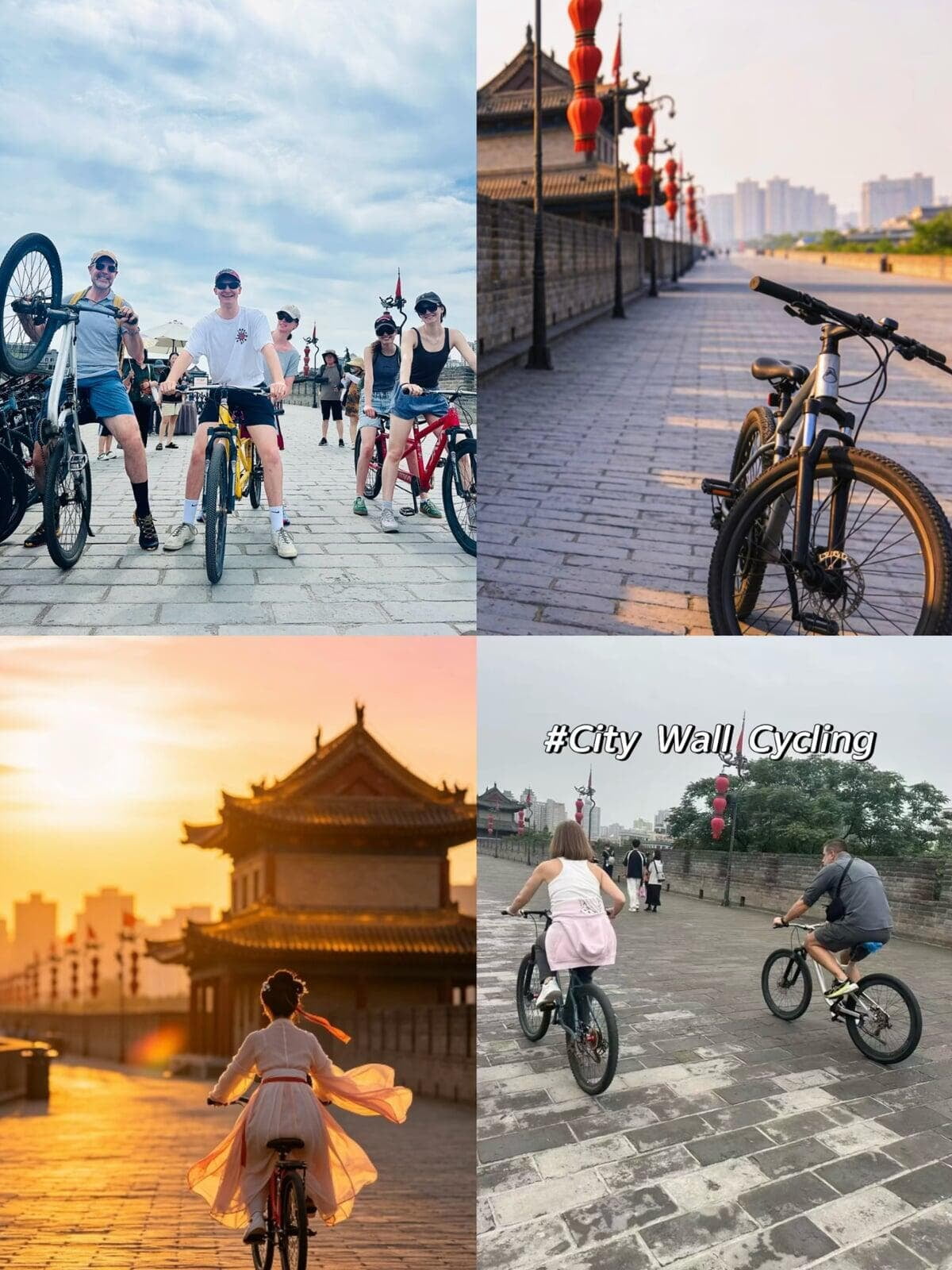
Cycling on the City Wall
City Wall Park
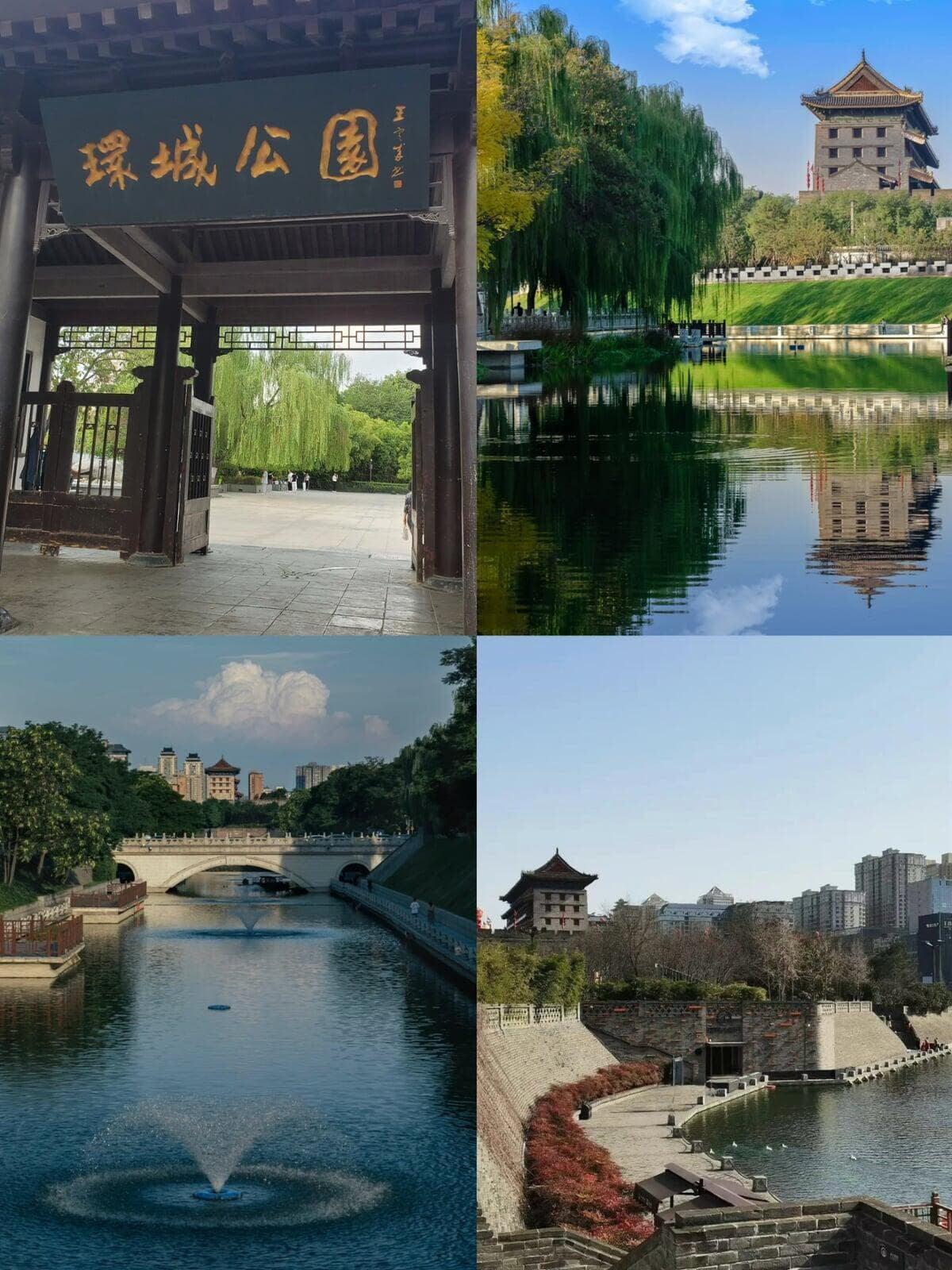
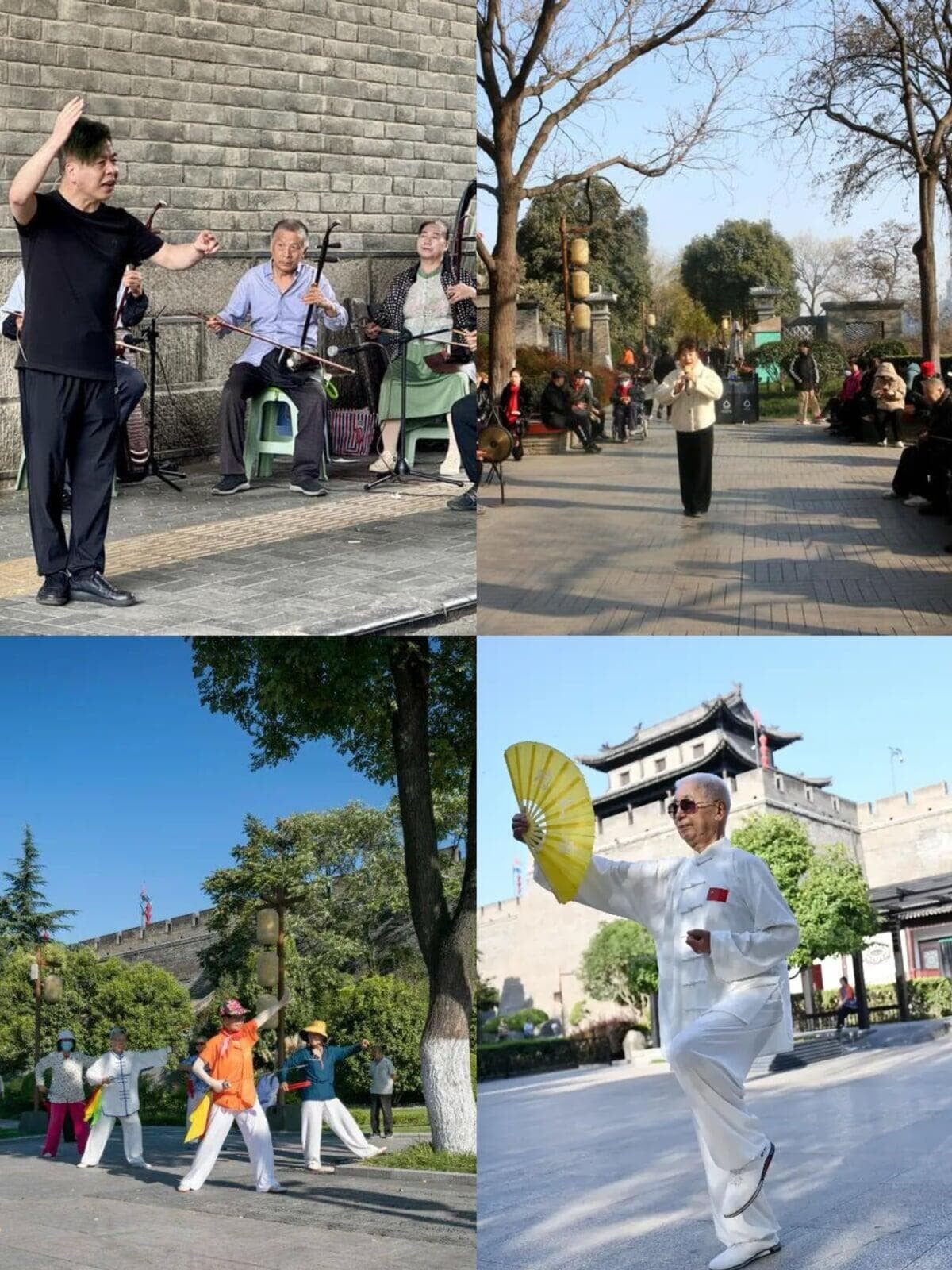
Stretching around Xi’an’s historic City Wall, City Wall Park offers a glimpse into the everyday life of the city. From early morning, local residents gather beneath the ancient walls and along the moat to practice Tai Chi, Tai Chi Sword, Baduanjin, traditional martial arts and other fitness activities. During the day, the park becomes a relaxing space for walking, jogging, sports and socializing, while in the afternoon and evening you may encounter Qin Opera (Qinqiang), traditional singing, dancing and other local activities. With the ancient City Wall above, the peaceful moat and greenery alongside it, and the lively rhythm of local life all around, the park offers a unique contrast between Xi’an’s long history and its modern everyday culture. For visitors, taking a leisurely walk through the park, watching a morning Tai Chi session, or stopping to listen to a spontaneous Qin Opera performance is a wonderful way to experience the authentic, unhurried side of Xi’an.
The Seven Gates of Xi’an’s South City Wall
The southern section of Xi’an City Wall is home to seven gates, each with its own history and character. From the ancient Yongning Gate to the modern Jianguo Gate, these gateways reflect more than 1,400 years of Xi’an’s urban history—from the Sui and Tang dynasties to the Ming Dynasty and modern China.
Walking along the southern wall is therefore not only a way to explore the city’s defensive architecture, but also a journey through different periods of Xi’an’s history.
Yongning Gate (South Gate)
(永宁门)
Yongning Gate, commonly known as the South Gate, is the oldest surviving gate on Xi’an’s City Wall and has been in continuous use for longer than any other gate in the city. The gate dates back to the early Sui Dynasty. It was originally one of the three southern gates of the imperial city of Sui and Tang Chang’an and was known as Anshang Gate (安上门). When Han Jian reduced the size of the city in the late Tang Dynasty, Anshang Gate was retained as the southern gate.During the Ming Dynasty, the gate was rebuilt and renamed Yongning Gate, meaning roughly “Eternal Peace.”Yongning Gate is one of the best-preserved gate complexes on the Xi’an City Wall. Its arrow tower was destroyed during the Xi’an Defense War, also known as the “Two Tigers Defending Chang’an”, and was reconstructed on its original site in 2013. Today, Yongning Gate is the main entrance for visitors exploring Xi’an City Wall. It is also one of the most impressive places to experience the wall at night, when the gate complex is illuminated.
Zhuque Gate (朱雀门)
Zhuque Gate was originally the main southern gate of the Imperial City of Tang Chang’an. The famous Zhuque Avenue, the central north-south avenue of the Tang capital, began here. During the Sui and Tang dynasties, the area around Zhuque Gate was used for important imperial ceremonies and military events. In 589, after the Sui Dynasty unified China, Emperor Wen of Sui is said to have reviewed his victorious army from the gate tower. When Han Jian reduced the size of Chang’an in the late Tang Dynasty, Zhuque Gate was closed. During the restoration of Xi’an City Wall in 1985, archaeologists discovered the remains of the original Tang Dynasty Zhuque Gate buried within the Ming-era wall. The excavated remains revealed marble column bases, carved stone thresholds and carefully laid brickwork, providing important evidence of the scale and craftsmanship of Tang Chang’an. The present-day Zhuque Gate was opened in 1986, immediately west of the archaeological remains.
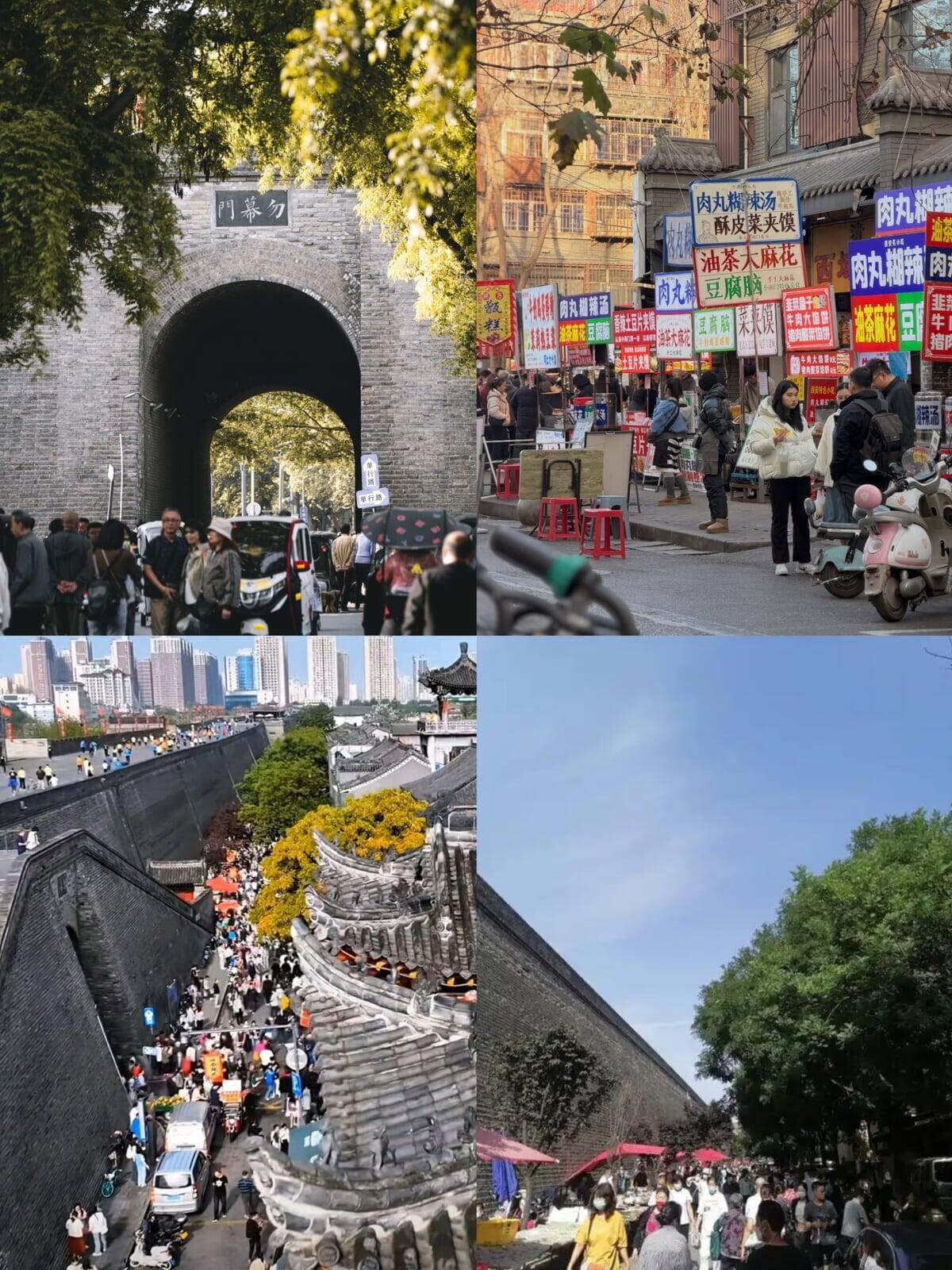
Wumu Gate (勿幕门)
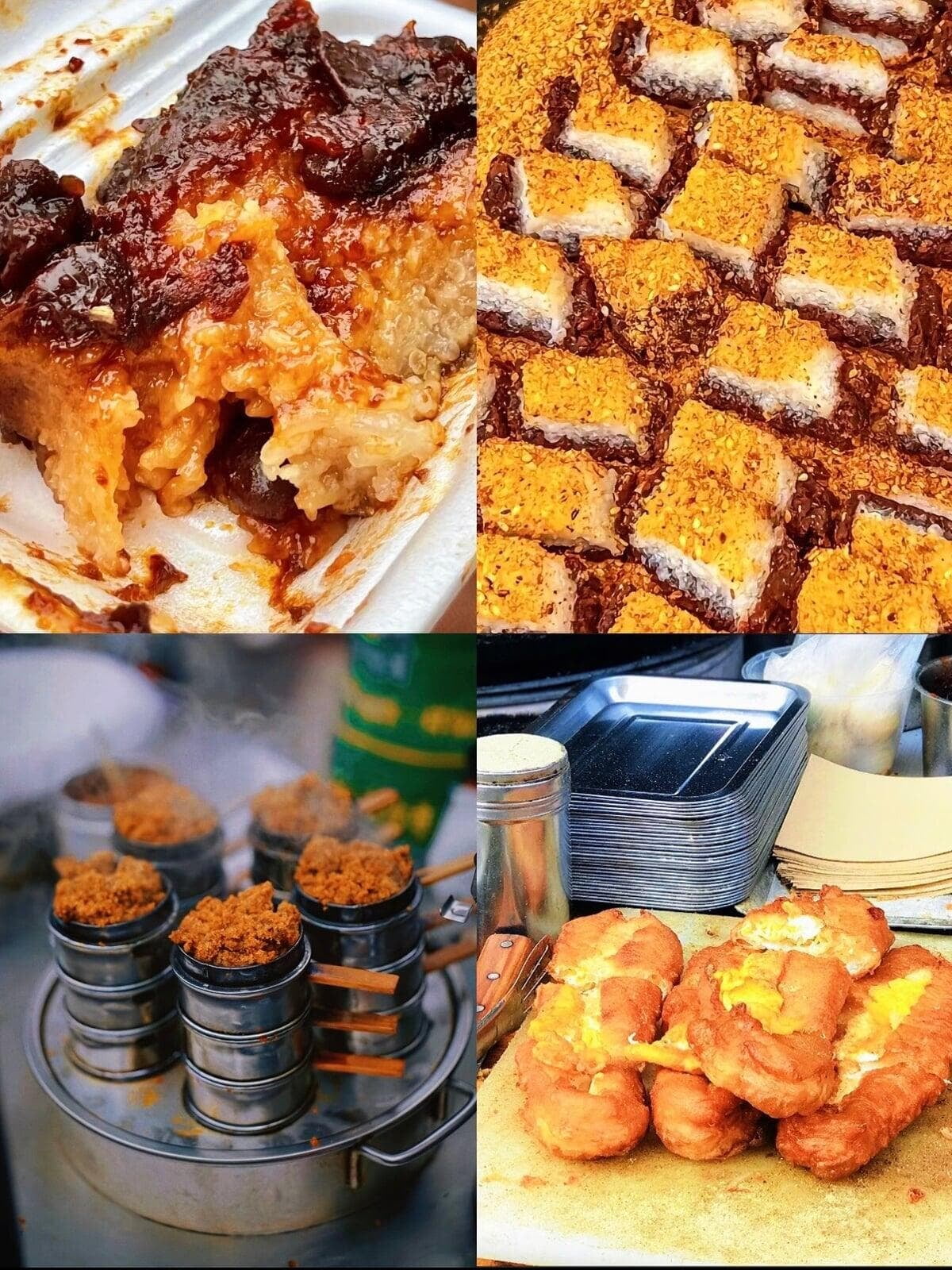
Wumu Gate is commonly known as Little South Gate (Xiaonanmen). Unlike Yongning and Zhuque Gates, it was not inherited from the ancient Sui and Tang imperial city. The gate was opened in 1939, during the Republican period, as a small passageway designed partly to provide local residents with access during wartime air raids. It was later renamed Wumu Gate in 1947 in memory of Jing Wumu (井勿幕), a prominent revolutionary from Shaanxi and one of the early members of the Tongmenghui. Jing Wumu played an important role in the revolutionary movement in Shaanxi and was later remembered by Sun Yat-sen and Huang Xing as an influential revolutionary figure in northwest China. Today, Wumu Gate remains a much smaller and more local-looking gateway than Yongning Gate. The area around it is particularly famous among locals for its morning market and traditional Xi’an street food.
Hanguang Gate (含光门)
Hanguang Gate is the westernmost gate on the southern section of Xi’an City Wall. It was originally one of the western gates on the southern side of the Imperial City of Tang Chang’an. When Han Jian reduced the size of the city in the late Tang Dynasty, two of its original gate openings were closed, while one eastern opening remained in use. After the Northern Song period, the remaining opening was eventually closed as well. During the restoration of Xi’an City Wall in 1984, archaeologists discovered the remains of the original Tang Dynasty Hanguang Gate. Excavations revealed stone column bases, carved thresholds and other architectural remains. Today, the archaeological remains are preserved inside the Xi’an Tang Imperial City Hanguang Gate Ruins Museum. The modern City Wall was constructed around the archaeological site, allowing visitors to see the ancient remains while also experiencing the later Ming City Wall. The museum can be accessed directly from the City Wall, making Hanguang Gate particularly valuable for visitors interested in archaeology and the history of Tang Chang’an.
Jianguo Gate (建国门)
Jianguo Gate is the easternmost gate on the southern section of Xi’an City Wall. Unlike Yongning, Zhuque and Hanguang Gates, Jianguo Gate is a relatively modern addition to the city wall. It was opened along Jianguo Road and named to commemorate the founding of the People’s Republic of China. Although Jianguo Road is relatively short, the surrounding area has a remarkable historical background. According to historical research, the Tang Dynasty statesman Changsun Wuji once lived in this area. During the Republican period, the neighborhood was also associated with General Zhang Xueliang, one of the key figures connected with the Xi’an Incident. His former residence is now a nationally protected historic site.
Heping Gate(和平门)
Heping Gate, meaning “Peace Gate,” was opened in 1953. The gate was named to express the Chinese people’s desire for peace after decades of war and upheaval. Inside the wall is Heping Road, while the road outside is Yanta Road. Heping Gate is also notable for its position along an important north-south axis connecting several major landmarks, including the Giant Wild Goose Pagoda, Dachaishi, Xi’an Railway Station and the former Hanyuan Hall of Daming Palace. Just inside the gate, the historic Shuncheng Lane leads west toward Wenchang Gate. Part of this route is associated with Xiamaling (“Dismounting Mound”), a historic site connected with the burial place of the Han Dynasty scholar and statesman Dong Zhongshu. According to tradition, even Emperor Wu of Han was expected to dismount when passing this area because of Dong Zhongshu’s importance.
Wenchang Gate(文昌门)
Wenchang Gate is located directly south of the Xi’an Beilin Museum (Forest of Steles) and is one of the most culturally distinctive gates on the southern section of the City Wall. The gate was opened in 1986. Above it stands Kuixing Tower, the only structure on Xi’an City Wall that was not originally designed for military defense. Kuixing, also known as Kui Xing, was one of the 28 traditional Chinese constellations and was traditionally believed to control literary success and academic achievement. He was associated with Wenchang, the deity of literature and learning. According to traditional belief, if Kuixing marked a scholar with his red writing brush, that person would achieve extraordinary success in the imperial examinations and might even become the top scholar. For this reason, Kuixing towers were traditionally built at Confucian academies and educational institutions. During the Ming and Qing dynasties, the Xi’an Prefecture School and Confucian Temple were located in the area now occupied by the Beilin Museum. Kuixing Tower was therefore built on the City Wall nearby. The tower was restored in 1986, and the newly opened gate beneath it was named Wenchang Gate.
City-gate Welcoming Ceremony
Half Show · Tang Dynasty Welcoming Ritual.
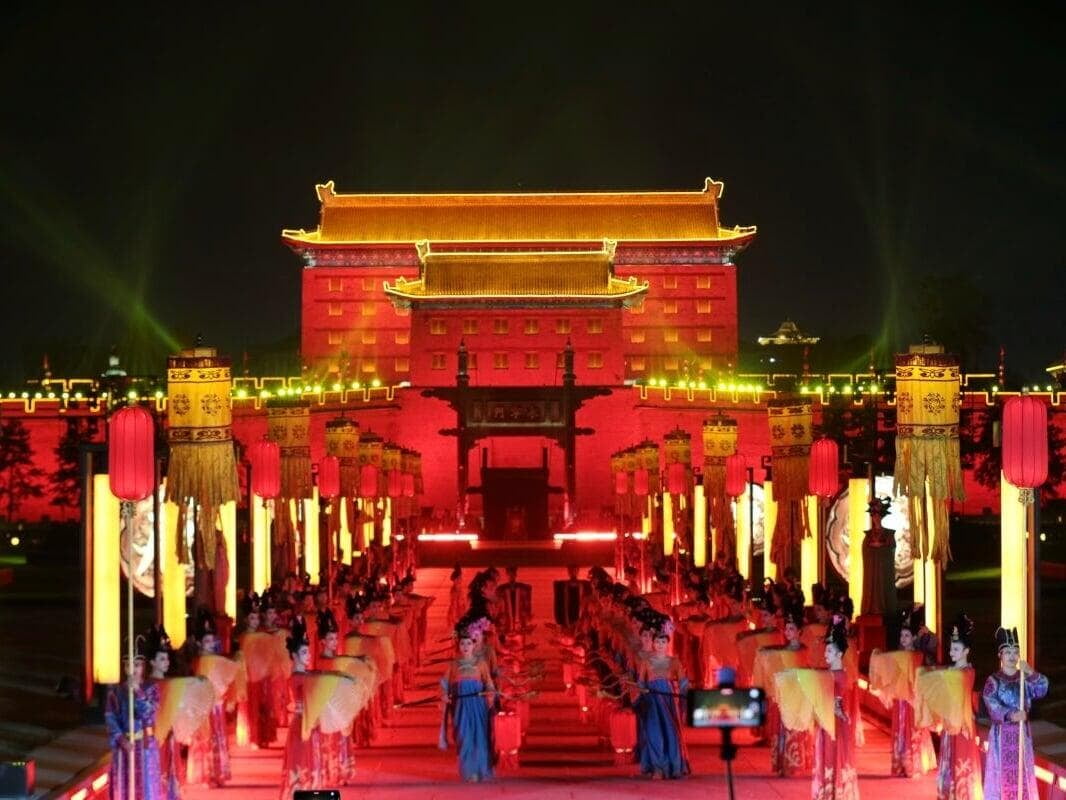
The City-gate Welcoming Ceremony is the opening chapter of Dream of Chang’an, presented as an immersive, walk-through experience at Yongning Gate on Xi’an City Wall. As night falls, the ancient city gate is illuminated and the welcoming ceremony begins with grand Tang-style music. The drawbridge is lowered and the ancient gate opens solemnly. Golden-armored guards stand in formation, while ceremonial officials and lantern-bearing attendants welcome visitors in the style of a grand Tang Dynasty reception. Visitors follow the ceremonial procession along the royal route and through the historic gate complex, experiencing the dignity, elegance and hospitality of Tang-era Chang’an. The ceremony recreates the atmosphere of a formal Tang Dynasty reception, when visitors from distant lands would enter Chang’an and be welcomed with elaborate rituals and music. This half-show focuses exclusively on the city-gate welcoming ceremony and ceremonial procession. It does not include the large-scale multimedia song-and-dance performance inside the barbican.
Dream of Chang’an
Full Show · Tang Dynasty Grand Welcoming Ceremony
Known as “The No. 1 Ceremony Under Heaven,”Dream of Chang’an – Tang Dynasty Grand Welcoming Ceremony is recognized as China’s only state-level welcoming ceremony performance. Since its launch, the show has welcomed numerous distinguished guests from China and abroad and has become one of the signature cultural performances of Xi’an. The full performance combines the Tang Dynasty welcoming ceremony with a spectacular multimedia live performance inside the historic barbican. Set against the more than 600-year-old Ming Dynasty City Wall, the show combines traditional Tang-style music, classical dance, live performances, large-scale projections and lighting effects to create an immersive journey into the world of Tang Dynasty Chang’an. The audience does not simply sit and watch the show. Instead, visitors follow the ceremonial procession before entering the historic gate complex and experiencing the different chapters of the performance along the way. The complete experience combines history, ritual, poetry, music, dance and visual effects, presenting the cultural richness and cosmopolitan spirit of Tang-era Chang’an.