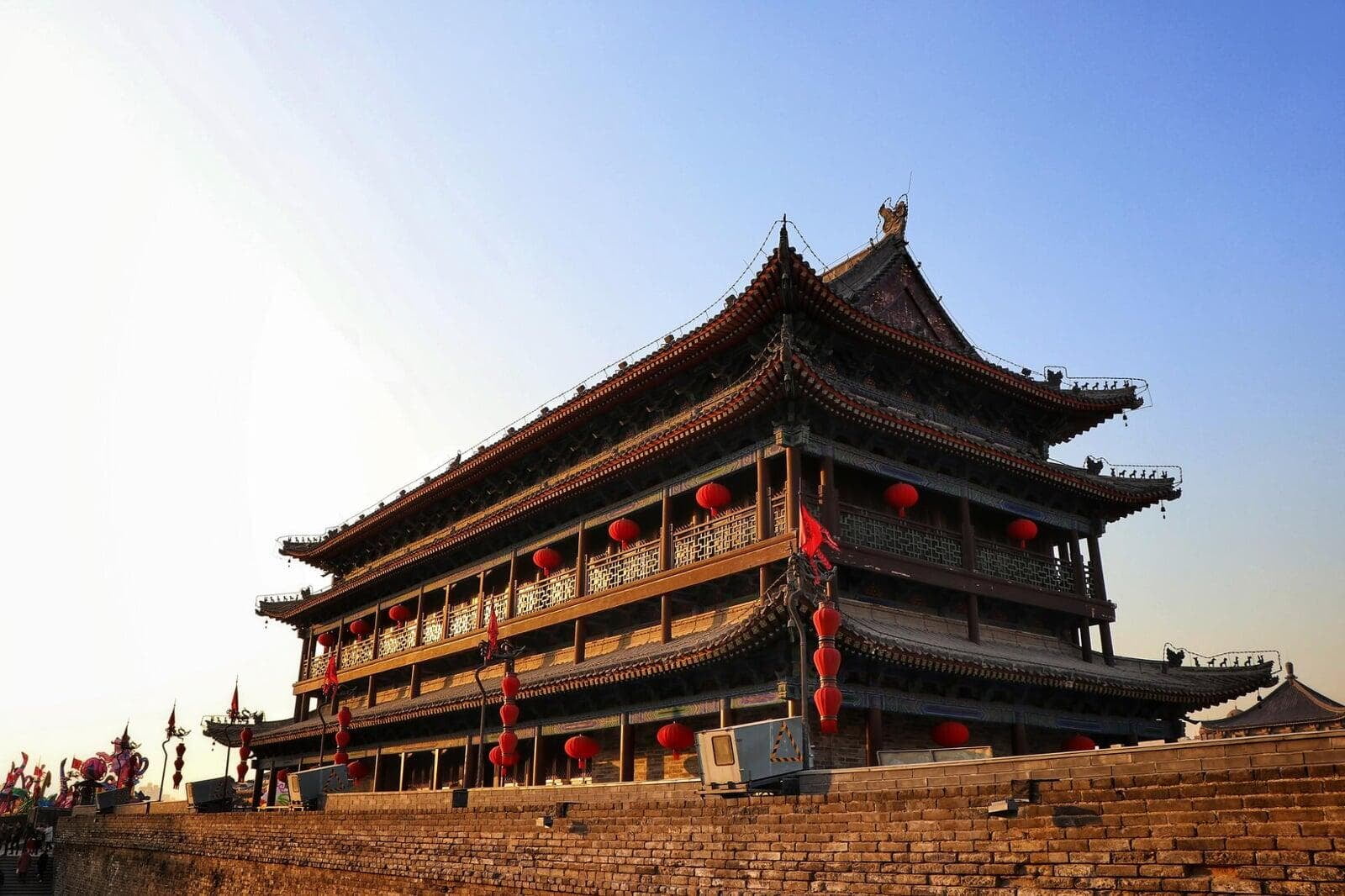
History of Xi’an City Wall
Ancient Origins
Xi’an’s city defenses can be traced back to earlier capital-city walls, including the Tang Dynasty imperial city. The existing Ming City Wall was constructed on the foundations and layout of the earlier urban defenses.
Ming Dynasty Construction — 1370–1378
The present City Wall was constructed during the reign of the Hongwu Emperor, Zhu Yuanzhang, between 1370 and 1378.
The project expanded and strengthened the old city defenses, creating the large rectangular fortification that remains today.
From Rammed Earth to Brick
The early wall was primarily a rammed-earth structure. During later repairs, particularly in the Ming Dynasty, the wall was reinforced and faced with bricks, making it far more resistant to weather and erosion.
Defensive System
The wall was never simply a single wall.
It formed a complete military defense system consisting of:
Moat → Drawbridge → Barbican → Arrow Tower → Gate Tower → City Wall
The thick walls, projecting ramparts and battlements allowed soldiers to observe, defend and control access to the city.
Qing Dynasty & Later Restoration
The wall underwent further repairs during the Qing Dynasty and major restoration work was carried out during the 20th century.
Since the 1980s, Xi’an has undertaken extensive conservation work, restoring sections of the wall and surrounding moat and developing the ring-shaped city-wall park.
A Living Heritage Site
Today, Xi’an City Wall is not simply a historical monument. It remains integrated into the daily life of the city, functioning as a major cultural and tourism landmark where visitors can walk, cycle, watch performances and experience the relationship between Xi’an’s ancient and modern urban landscape.